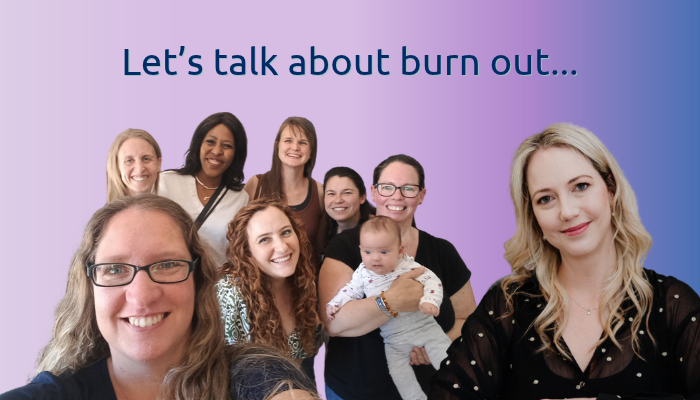
On Wednesday, we had Dr Lené Le Roux do a session for the Brave Mamas members all about burn out in early motherhood. She’s a GP who specialises in mental health, and helping moms manage their mental health is an area she is so knowledgeable and passionate about. I’ve been chewing on it ever since, and wanted to share some of my key takeaways.
The first thing I want you to hear: burnout is not a character flaw.
It’s a real, recognised condition. It’s in the ICD-11 (that’s the doctor’s big book of diagnoses), and is a physical condition, so not just in your head. It happens when stress carries on with no recovery in between and no end in sight, and what’s being asked of you is bigger than what you’ve got to give. Lené was clear that it isn’t weakness, it isn’t failure, and it isn’t a personality trait.
The next important consideration is why are moms so vulnerable in these first few years? Because it’s a lot, all at once.
The mental load of holding every single detail, the physical work of small children, the broken sleep, often work on top of all of it, and underneath, your hormones going haywire. No wonder so many moms get to the point of burn out.
So how do you know if you’re in it vs experiencing expected levels of exhaustion from motherhood? Lené gave three signs to watch out for:
- Exhaustion that rest doesn’t fix. Even if you do get a decent night’s sleep, you still wake up tired. And aside from physical exhaustion, you feel emotionally depleted too.
- Detachment and cynicism. You’re going through the motions, and the things you used to care about feel flat. You may even find yourself totally apathetic to others instead of your usual compassionate self.
- Feeling less effective. You’re dropping balls you’d normally catch and struggling to hold it all together.
If you read that and got a small sinking feeling, please pause and take a breath. You’re not alone. I realised I was in burn out while live on Expresso Show a few years ago, as I was literally describing the signs of burn out. Talk about an out of body experience.
Lené also said burnout and depression overlap a lot, so if the heaviness is feeling overwhelming, please see a mental health professional who can help you work out which one it is. Any of the doctors at Lené’s practice in Claremont can help.
Now, let’s talk about the recovery part, cause this is where the good news comes in.
Lené’s approach is biopsychosocial. Sounds like a fancy word, but it’s actually a simple idea. Look at what you can actually do differently in three areas:
Your biology: food, movement, sleep, get your vitamin D and thyroid checked, hydration etc.
Your psychology: how you talk to yourself, therapy, mindset work etc.
Your social world: finding people you can genuinely lean on.
Anyone recognising my Whole Self Approach in that? In case you’re new here, this is the foundation of my approach to self care – taking care of all the parts of you: physical, emotional, mental, spiritual.
This is exactly why I built the Self Care Challenge the way I did.
It runs over a full month and offers prompts to help you take care of your whole self.
- Mondays we name blocks to self care and we give ourselves permission to do it anyway.
- Tuesdays we honour our physical needs.
- Wednesdays we support our emotional needs.
- Thursdays we protect our mental health.
- Fridays we connect with our spiritual needs.
- Weekends are for catching up and letting it settle.
And doing it alongside other moms, is the difference between thinking “I should drink more water” and actually drinking it because when you see how other moms are getting things done it gives you the motivation and practical ideas to do the same.
The Self Care Challenge starts on 1st November. So if you’d like to join us and begin to feel more resourced, you can do so here.
